


Living Trusts, Wills & Estate Planning for Seniors
Living Trusts, Wills & Estate Planning for Seniors
 Set up a living trust without a lawyer
Protect your home and life savings
Prevent family arguments before they start
BUNDLE & SAVE
Couldn't load pickup availability

Living Trusts, Wills & Estate Planning for Seniors


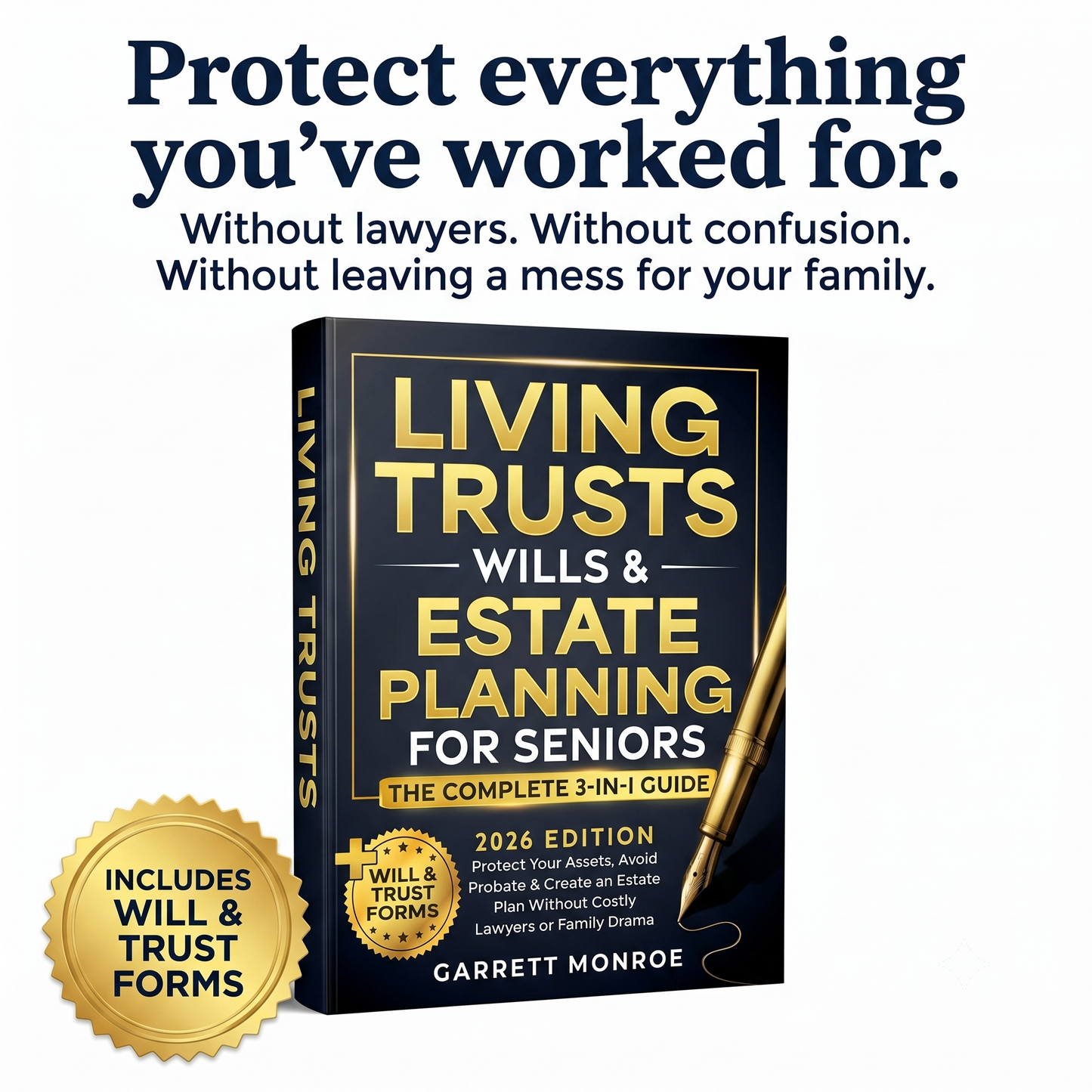
Everything you've worked for deserves a plan — not a courtroom
Most people believe estate planning is only for the wealthy, or that it requires an expensive attorney and months of back-and-forth. Neither is true. What is true is that dying without a plan means a probate court decides who gets your home, your savings, and everything else you've spent a lifetime building. It means your family — already grieving — has to navigate a legal process that can take months, cost thousands, and cause permanent damage to relationships. Living Trusts, Wills & Estate Planning for Seniors walks you through every step of building a complete estate plan yourself, in plain English, this weekend. No lawyer required. No legal background needed. Just a clear guide written specifically for people who want to protect what they've built and spare their family the drama.

Your family shouldn't have to figure it out after you're gone
The most loving thing you can do for the people you're leaving behind is make it easy. A clear will. A living trust that bypasses probate. A named healthcare proxy. A financial power of attorney. These aren't complicated things — but without them, your family is left guessing, arguing, and navigating a legal system that moves slowly and costs dearly. This book gives you every document, every form, and every explanation you need to put a complete estate plan in place — so when the time comes, your family has clarity instead of conflict, and peace instead of paperwork.
Real time results
Clinically-inspired results
92%
of readers said they felt significantly more confident about their family's financial future after completing the book
95%
successfully completed their living trust or will without hiring an attorney
98%
said it was the clearest and most practical estate planning guide they had ever read
based on customer feedback after 1–3 weeks of regular use
FAQs
Do I really need a living trust, or is a will enough?
Do I really need a living trust, or is a will enough?
A will is a good start — but on its own it still goes through probate court after you pass. That means a judge oversees the distribution of your assets, the process can take 12 to 18 months, and your family pays legal fees before they receive anything. A living trust bypasses probate entirely. Your assets transfer directly to the people you choose, privately and quickly, without court involvement. This book explains both in plain English and helps you decide which combination is right for your specific situation.
Can I really do this without hiring a lawyer?
Can I really do this without hiring a lawyer?
Yes. Estate planning became significantly more accessible once the legal documents were standardized. Most people with straightforward estates — a home, savings, retirement accounts, personal property — do not need an attorney. This book walks you through every document step by step in language designed for everyday people, not legal professionals. It also includes ready-to-use Will and Trust forms so you're not starting from scratch.
What exactly is probate and why is it such a big deal?
What exactly is probate and why is it such a big deal?
Probate is the court-supervised process of distributing a deceased person's assets. Even if you have a will, most assets still go through probate unless they're held in a trust or have designated beneficiaries. The problems with probate are that it is public record — meaning anyone can see what you owned and who received it — it can take well over a year to complete, it typically costs 3% to 8% of your total estate in fees, and it creates significant stress for your family during an already difficult time. A properly structured living trust eliminates all of that.
What if I have a complicated situation — a second marriage, stepchildren, or a blended family?
What if I have a complicated situation — a second marriage, stepchildren, or a blended family?
The book specifically addresses blended family situations, second marriages, and how to structure your estate plan when you want to treat different family members differently. These are some of the most common situations that lead to family conflict when no plan is in place, and the book dedicates significant attention to handling them clearly and fairly.
What if I've already started an estate plan years ago — is this still useful?
What if I've already started an estate plan years ago — is this still useful?
Very much so. Laws change, family situations change, and estate plans that were valid ten years ago may be outdated or incomplete by today's standards. This book helps you review what you have, identify what's missing, update beneficiary designations, and make sure everything still reflects your actual wishes.
Try It Risk-Free
Have questions? Contact our support at hey@loxally.com for any questions and concerns.